

The 2026 Email Deliverability Checklist for Sales & Marketing Teams
Is your cold email landing in the inbox or the spam folder? In 2026, strict enforcement by providers like Google and Yahoo means technical setup is no longer optional. This actionable checklist covers everything from SPF/DMARC authentication to domain setup and list hygiene to help sales teams protect their revenue.
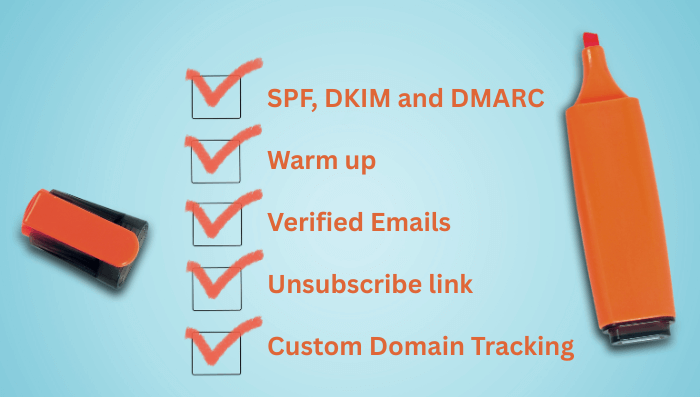
The Inbox has Changed in 2025
If you are still using cold email tactics from three years ago, you are likely landing in spam.
In 2025, major inbox providers like Google and Yahoo have moved beyond simple keyword blocking. They now utilize advanced AI to analyze sender reputation, engagement rates, and technical authentication with ruthless precision. Deliverability is no longer just an "IT problem"—it is a revenue problem.
Whether you are in sales, marketing, or growth, this checklist covers the essential steps to ensure your emails actually get seen.
Phase 1: The Technical Foundation (Non-Negotiable)
Before you write a single line of copy, your technical infrastructure must be bulletproof. In 2026, "optional" protocols are now mandatory.
- Authenticate with SPF, DKIM, and DMARC:
- SPF (Sender Policy Framework): Your ID card. It lists which IP addresses are allowed to send emails on your behalf.
- DKIM (DomainKeys Identified Mail): Your wax seal. It adds a digital signature to verify the email hasn't been tampered with.
- DMARC: The enforcer. It tells servers what to do if an email fails the first two checks. Tip: In 2026, having a DMARC policy of at least
p=noneis the bare minimum, but aiming forp=quarantineorp=rejectis safer for brand protection.
- Set Up a Custom Tracking Domain:
- Most sales platforms use a shared tracking pixel by default. If another user on that platform spams, your reputation suffers. Always set up a custom tracking domain (e.g.,
link.yourcompany.com) to isolate your reputation.
- Most sales platforms use a shared tracking pixel by default. If another user on that platform spams, your reputation suffers. Always set up a custom tracking domain (e.g.,
- Forwarding and Redirects:
- Ensure your sending domain redirects to a functioning website. Inbox providers check this to verify you are a real business.
Phase 2: Reputation Management
You cannot launch a new domain and send 500 emails on Day 1. That is one of the fastest ways to damage your sender reputation and trigger spam filtering.
-
The Reputation-Building Protocol:
- Start with controlled sending volumes and scale responsibly as you monitor engagement, bounce rates, and inbox placement.
- Focus on generating authentic engagement through relevant, personalized outreach rather than relying on artificial signals.
-
List Hygiene is King:
- Verify every email: Use tools to validate email addresses before sending. Hard bounces (invalid emails) damage your sender reputation.
- Remove unengaged leads: If a prospect hasn't engaged with your emails in six months, consider removing them from active campaigns. Consistently sending to unresponsive contacts can reduce engagement rates and signal low relevance to mailbox providers.
Phase 3: Content & Engagement
Spam filters in 2026 are semantic. They read your email like a human would.
- Avoid "Spammy" Language:
- Reduce usage of aggressive sales triggers like "Guarantee," "No cost," "100% Free," or writing in ALL CAPS.
- Text-to-HTML Ratio:
- Cold emails should look like they were written by a human, not a marketing bot. Keep HTML minimal. Avoid heavy images, tracking scripts, or complex layouts. Plain text often performs best.
- The Unsubscribe Link:
- Make it easy to leave. Hiding your unsubscribe button leads to prospects marking you as "Spam"—which is a death sentence for your domain reputation. A polite "opt-out" is far better than a spam complaint.
Phase 4: Continuous Monitoring
Deliverability is not a "set it and forget it" task.
- Google Postmaster Tools:
- This is the source of truth. It shows you exactly how Google views your domain reputation (High, Medium, Low, or Bad).
- Monitor Blacklists:
- Regularly check if your IP or domain appears on lists like Spamhaus or SORBS.
Final Thoughts
The goal of cold email in 2026 isn't just to sell; it's to start a conversation. When you prioritize technical health and genuine engagement, you don't just avoid the spam folder—you build a sustainable channel for growth.